How I Rebuilt My Balance Over Time—And Why It Changed Everything
Balance isn’t just about standing on one foot—it’s foundational to how we move, live, and stay independent. For years, I ignored mine until a small stumble turned into a wake-up call. What followed wasn’t a quick fix, but a long-term journey of retraining my body and mind. This is a story of gradual progress, real shifts, and why consistent rehabilitation work truly matters. It’s not about dramatic changes overnight, but about showing up each day with intention. What began as a moment of fear evolved into a powerful commitment to stability, confidence, and long-term well-being. Balance, I’ve learned, is not something we either have or don’t—it’s something we nurture.
The Moment Everything Shifted
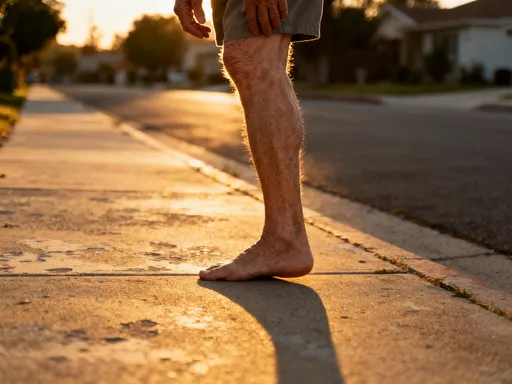
A seemingly ordinary Tuesday became the turning point. I stepped off the curb, distracted by conversation, and my foot landed awkwardly. My body wobbled. I caught myself just in time, but the near-fall left me shaken. It wasn’t the first time I’d felt unsteady, but it was the first time I truly noticed. That moment sparked a quiet alarm—something was off. I had always considered myself active enough, walking daily and managing household tasks without issue. But this small incident revealed a hidden decline: my balance, once reliable, was weakening.
The emotional impact lingered longer than the physical wobble. I began to notice a subtle shift in how I moved through the world. I hesitated on uneven sidewalks. I held railings more tightly on stairs. The fear of falling, once abstract, now felt real. For women in their 30s to 55s, this experience is more common than many realize. Life often pulls us in multiple directions—work, family, responsibilities—leaving little room to focus on physical maintenance. Over time, reduced physical activity, prolonged sitting, and natural aging processes begin to affect our postural control. The body adapts to stillness, and when movement patterns weaken, balance suffers.
What made this moment different was not the stumble itself, but the realization that I had been ignoring early warning signs. I recalled other small incidents: reaching for a high shelf and feeling unsteady, turning too quickly and losing orientation, or even standing in the shower and gripping the wall instinctively. These were not isolated events but part of a larger pattern. The wake-up call wasn’t just about physical risk—it was about independence. I didn’t want to reach an age where simple tasks required assistance. I wanted to remain capable, confident, and in control of my own body. That desire became the foundation for change.
Understanding Balance: More Than Just Legs
Most people assume balance is simply a matter of leg strength or coordination. While those factors play a role, balance is actually a sophisticated system that relies on three primary inputs: the vestibular system in the inner ear, visual information from the eyes, and somatosensory feedback from the muscles, joints, and skin. These three systems work together seamlessly under normal conditions, allowing us to stand, walk, and move without conscious effort. But when one component falters, the entire system becomes compromised.
The vestibular system, located in the inner ear, detects motion, head position, and spatial orientation. It’s what helps you know whether you’re upright, tilting, or moving forward. When this system is impaired—due to aging, minor infections, or prolonged inactivity—your brain receives inaccurate signals, leading to dizziness or disorientation. The visual system provides environmental cues. Your eyes help you judge distance, detect obstacles, and maintain spatial awareness. In low light or cluttered spaces, visual input becomes less reliable, placing greater demand on the other two systems.
Somatosensory feedback comes from pressure receptors in your feet, ankles, knees, and hips. These sensors tell your brain where your body is in space. If you’ve ever stood on a soft surface like a foam mat or thick carpet, you’ve experienced how reduced feedback challenges your stability. As we age, nerve sensitivity can diminish, particularly in the feet, making it harder to detect subtle shifts in weight. This is why many people report feeling “numb” or “disconnected” from their lower limbs over time.
The brain integrates all this information in real time, making constant micro-adjustments to keep you upright. This process is automatic—until it isn’t. When one input is weakened, the brain must compensate, often over-relying on the remaining systems. For example, someone with poor foot sensation may depend heavily on vision, becoming unsteady in the dark. The good news is that balance is not fixed. Like a muscle, the balance system can be trained and improved through targeted exercises. The key lies in stimulating all three components to enhance communication and coordination between them.
Why Long-Term Training Beats Quick Fixes
When faced with a health concern, many of us look for immediate solutions. We want quick results—something that will restore function fast. But balance is not built in a week. Unlike short-term fixes like braces or temporary aids, lasting improvement comes from consistent, long-term training. This is because balance relies on neuroplasticity, the brain’s ability to reorganize neural pathways in response to repeated practice. Just as learning a new language or musical instrument requires repetition, so does retraining the balance system.
Neuroplasticity works through repetition and reinforcement. Each time you perform a balance exercise, your brain strengthens the connections between sensory input and motor output. Over time, these pathways become more efficient, allowing for faster, more accurate responses. But this process takes time. Research shows that meaningful neurological adaptation typically requires several weeks of regular practice. Expecting rapid progress can lead to frustration and early abandonment of efforts.
Short-term approaches often fail because they don’t address the root cause. A few days of standing on one leg may create temporary awareness, but without consistency, the gains fade. True rehabilitation is not about intensity but about frequency. Daily, low-effort practice is more effective than occasional, high-intensity sessions. This is especially true for adults managing busy schedules. The goal is not to push the body to its limits but to engage it regularly in mindful movement.
Another reason long-term training succeeds is that it builds muscle memory. When balance exercises become routine, the body begins to respond automatically. You no longer have to think about standing straight or shifting weight—you just do it. This automaticity is crucial for real-world situations, where quick reactions are needed. Whether stepping off a curb, navigating a crowded room, or adjusting to a slippery floor, automatic balance responses prevent falls. These reflexes don’t develop overnight; they emerge gradually through repetition, patience, and persistence.
My Daily Balance Routine: Small Moves, Big Results
One of the most empowering realizations was that I didn’t need special equipment, a gym membership, or hours of free time. My balance routine was built around everyday moments—activities already embedded in my day. The key was intentionality: turning passive time into active training. I started with just two minutes at a time, gradually increasing duration and complexity as my confidence grew.
One of the first exercises I incorporated was standing on one leg while brushing my teeth. This simple act engaged my core, challenged my ankle stability, and required focus. I began with 20 seconds per leg, holding onto the sink if needed. As my balance improved, I reduced hand support and increased the duration. Over time, I could stand steadily for a full minute on each leg. I also introduced variations—closing my eyes to reduce visual input, or shifting my gaze slowly from side to side to engage the vestibular system.
Another daily practice was the heel-to-toe walk, also known as the tandem walk. I performed this down the hallway, placing one foot directly in front of the other, heel to toe, arms slightly out for balance. This exercise mimics the sobriety test used by law enforcement, but its purpose here is therapeutic. It improves coordination, strengthens the small muscles in the feet and ankles, and enhances spatial awareness. I started with five steps and worked up to 20, focusing on slow, controlled movements.
To specifically challenge the vestibular system, I added controlled head turns. Standing with feet shoulder-width apart, I would slowly turn my head from side to side while keeping my body still. Then, I progressed to looking up and down. These movements stimulate the fluid in the inner ear, helping the brain recalibrate motion detection. I performed this for one minute daily, ensuring movements were smooth and deliberate. If I felt dizzy, I slowed down or paused—listening to my body was essential.
Other easy-to-integrate practices included rising from a chair without using my hands, standing on a folded towel to simulate an unstable surface, and practicing weight shifts by rocking forward and backward on my feet. The beauty of these exercises was their accessibility. They required no cost, no setup, and fit naturally into a busy day. The cumulative effect, however, was profound.
Progress You Can Actually Feel
Unlike weight loss or strength gains, balance improvements are often subtle at first. There’s no scale to measure progress, no mirror to show change. Yet, the shifts are deeply felt. My first noticeable milestone was being able to stand on one leg for a full minute without holding on. It seemed small, but it represented a major shift in control and confidence.
Soon after, I noticed changes in my daily movements. Walking on uneven ground—like gravel paths or sloped driveways—no longer made me tense. I could navigate crowded spaces without gripping shopping carts or walls. I felt more stable getting in and out of the car, climbing stairs, and even during quick turns in the kitchen. These were not dramatic transformations, but they restored a sense of ease and safety in everyday life.
The emotional benefits were just as significant as the physical ones. The constant background anxiety about falling began to fade. I felt more present in my body, more connected to my movements. This mental shift was liberating. Instead of avoiding certain activities out of fear, I began to engage with them again—dancing at family gatherings, walking in parks, even playing with grandchildren without hesitation.
What surprised me most was how these small gains compounded over time. After three months of consistent practice, I could perform balance exercises with my eyes closed, on uneven surfaces, and while multitasking—like talking or carrying a light object. These were real-world skills that translated directly into greater independence. The confidence I gained extended beyond physical ability; it influenced how I approached challenges in other areas of life. I learned that progress doesn’t have to be loud to be meaningful.
Common Mistakes and How to Avoid Them
Not every step forward was smooth. In the beginning, I made several common errors that slowed my progress. One was pushing too hard, too soon. Eager to see results, I tried advanced exercises before mastering the basics. This led to frustration and minor discomfort. I learned that balance training is not about intensity but about consistency and proper form. Starting with foundational movements and progressing gradually is far more effective than rushing ahead.
Another mistake was neglecting head movements. At first, I focused only on standing and walking exercises, ignoring the vestibular component. It wasn’t until I incorporated controlled head turns that I noticed a significant improvement in dizziness and spatial orientation. This taught me that all three systems—visual, vestibular, and somatosensory—must be trained equally for optimal results.
I also underestimated the importance of safety. Early on, I attempted exercises on slippery floors or without nearby support. After one near-miss, I committed to always having a wall, counter, or sturdy chair within reach. I avoided loose rugs and ensured good lighting in practice areas. These small precautions made training safer and more sustainable.
Finally, I had to let go of the expectation of fast results. There were weeks when I felt no change, which tempted me to quit. But I reminded myself that neurological adaptation takes time. By tracking subjective improvements—like standing longer, walking steadier, or feeling more confident—I stayed motivated. The key was patience and trust in the process. Listening to my body, respecting its limits, and celebrating small wins kept me moving forward.
Making Balance a Lifelong Habit
The most important shift was changing my mindset—from seeing balance training as a temporary fix to recognizing it as a permanent part of wellness. Just as we brush our teeth daily to maintain oral health, we must care for our balance to maintain mobility and independence. This isn’t a phase; it’s a lifelong commitment.
I integrated balance work into routine moments: standing on one leg while waiting for the coffee to brew, doing heel-to-toe walks while watching TV, or practicing weight shifts while folding laundry. These micro-practices add up. Over time, they become automatic, woven into the fabric of daily life. The goal is not perfection but presence—showing up, paying attention, and moving with intention.
This journey taught me that true strength includes stability. It’s not just about lifting heavy objects or running long distances; it’s about moving through the world with confidence and control. Taking care of your balance is one of the most important long-term investments you can make in your health. It preserves independence, reduces fall risk, and enhances quality of life at every age.
For women managing households, careers, and family responsibilities, self-care often takes a back seat. But balance training doesn’t require extra time—it works within the time you already have. It’s not about adding more to your plate but about transforming the way you move through your day. And the rewards are lasting: greater safety, increased confidence, and the freedom to live fully, without fear.