Why Qigong Changed My Daily Rhythm — A Real Wellness Shift
For years, I chased wellness through quick fixes—juice cleanses, intense workouts, fancy supplements. Nothing stuck. Then I found qigong, not as a trend, but as a quiet reset. It wasn’t flashy, but it reshaped how I start my day, manage stress, and stay grounded. This isn’t about magic—it’s about consistency. In this piece, I’ll walk you through how regular qigong practice slowly transformed my routine, energy, and mindset, backed by tradition and real experience.
The Burnout That Led Me to Qigong
Like many women in their 30s and 40s, I wore busyness as a badge of honor. Between managing a household, supporting family needs, and keeping up with professional responsibilities, I rarely paused. My idea of self-care was squeezing in a 45-minute spin class once a week or drinking green juice while rushing between errands. But despite these efforts, I felt constantly drained—mentally foggy, physically tense, and emotionally stretched thin. Mornings began with a sense of dread, not energy. I relied on coffee to push through, and by evening, I was too exhausted to enjoy time with loved ones.
The turning point came during a routine doctor’s visit. After running blood tests and reviewing my symptoms—chronic fatigue, difficulty concentrating, frequent tension headaches—my physician didn’t prescribe medication. Instead, she asked, “When was the last time you truly rested?” That question hit hard. I realized I had been treating my body like a machine that could run indefinitely without maintenance. I had tried every popular wellness trend, from intermittent fasting to high-intensity interval training, but none addressed the root issue: I was out of balance.
It was around this time that a friend gently suggested I try qigong. She described it as “movement you can feel without straining,” something she had incorporated into her mornings after recovering from burnout. I was skeptical. The word sounded exotic, almost mystical. I associated it with images of people in flowing robes standing motionless in parks. But desperation made me curious. I decided to give it one month—just ten minutes a day. No expectations, no pressure. That small decision became the beginning of a profound shift.
What Qigong Really Is (And What It’s Not)
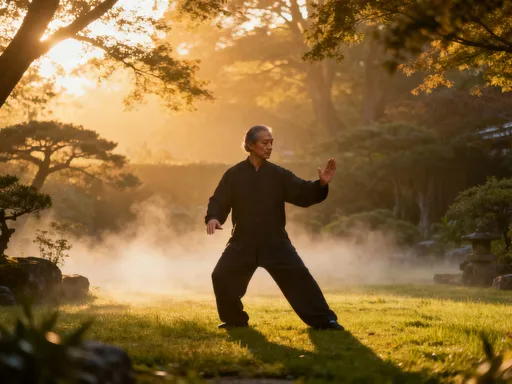
Before beginning, I needed to understand what qigong actually was. My initial assumptions were shaped by pop culture and fragmented online videos—misconceptions that many share. I thought it might be a form of martial arts performance or a spiritual ritual requiring special beliefs. But through study and practice, I learned that qigong is neither performance nor dogma. At its core, qigong is a holistic practice rooted in Traditional Chinese Medicine (TCM), combining gentle physical movement, coordinated breathing, and mindful awareness to support the body’s natural ability to heal and regulate itself.
The word “qigong” is made up of two parts: *qi* (pronounced “chee”), meaning vital energy or life force, and *gong*, meaning cultivation or practice. So, qigong literally means “cultivating energy.” This concept may sound abstract, but in practice, it’s quite tangible. Think of *qi* as the underlying current of vitality that flows through all living things—similar to how electricity powers a device. When that flow is smooth and balanced, the body functions optimally. When it’s blocked or depleted, we feel fatigued, stressed, or unwell.
Unlike high-impact exercise, qigong doesn’t rely on speed or strength. It’s characterized by slow, deliberate motions—often repeated in sequences—that are accessible to people of all ages and fitness levels. Movements are designed to open energy pathways, release tension, and improve circulation. Breathing is synchronized with motion, creating a rhythm that calms the nervous system. And mindfulness is woven throughout, encouraging presence and internal awareness. Together, these elements form a practice that is both simple and deeply effective.
Importantly, qigong is not a substitute for medical treatment, nor is it a miracle cure. It doesn’t promise instant transformation or dramatic weight loss. What it offers is something more enduring: a way to restore balance, reduce stress, and reconnect with the body’s innate wisdom. It’s not about believing in something unseen—it’s about experiencing subtle but real shifts in how you feel, think, and move through the day.
Why Routine Regularity Matters in Wellness
One of the biggest lessons I learned during my wellness journey is that consistency matters far more than intensity. We live in a culture that celebrates extremes—extreme workouts, extreme diets, extreme results. But the truth is, sustainable health doesn’t come from occasional bursts of effort. It comes from small, repeated actions that build over time. This principle is supported by neuroscience and behavioral psychology: habits formed through regular practice create neural pathways that make healthy choices easier and more automatic.
When I first tried qigong, I didn’t practice for hours. I started with just ten minutes each morning. That might sound insignificant compared to an hour-long yoga class or a rigorous gym session. But what surprised me was how quickly those ten minutes began to influence the rest of my day. I noticed I was less reactive to minor frustrations—like spilled coffee or traffic delays. I felt more patient with family members. My sleep improved. These weren’t dramatic changes, but they were consistent, and they accumulated.
Research in behavioral science shows that frequency is more important than duration when building new habits. A study published in the European Journal of Social Psychology found that it takes an average of 66 days for a behavior to become automatic, but the key factor is repetition, not length of each session. In other words, practicing qigong for ten minutes every day is more effective than doing it for an hour once a week. This insight helped me let go of perfectionism. I no longer felt I had to “do it right” or “feel amazing” every time. Showing up was enough.
Moreover, regular qigong practice supports the body’s autonomic nervous system—the part that controls stress response, digestion, heart rate, and recovery. Chronic stress keeps this system in “fight or flight” mode, which over time contributes to fatigue, inflammation, and weakened immunity. Gentle, rhythmic practices like qigong activate the parasympathetic nervous system, often called the “rest and digest” state. Over time, this recalibration helps the body return to balance more easily, even in the face of daily stressors.
My First 30 Days: Testing the Practice
I began my qigong journey in early spring, choosing a quiet corner of my living room where morning light filtered through the curtains. I committed to ten minutes a day, right after waking, before checking my phone or making coffee. I followed a simple beginner’s routine from a trusted online resource, focusing on three foundational exercises: *Lifting the Sky*, *Separating Heaven and Earth*, and gentle swaying motions.
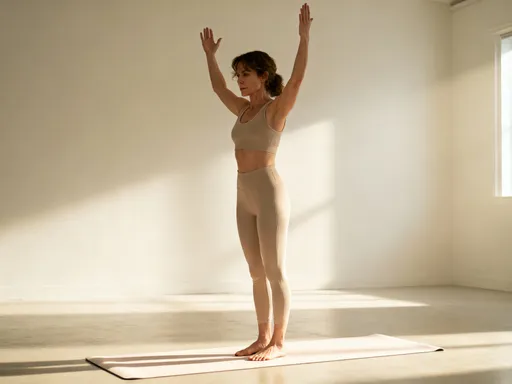
*Lifting the Sky* involves slowly raising the arms overhead as if gathering energy from above, then lowering them in front of the body as if pressing down into the earth. The movement is fluid, synchronized with deep breathing—inhaling as the arms rise, exhaling as they fall. At first, I felt a bit self-conscious, as though someone might walk in and laugh. But within a few days, the rhythm began to feel natural. I noticed my shoulders relaxing, my breath deepening, and a subtle warmth spreading through my chest and hands.
*Separating Heaven and Earth* is a lateral stretch that opens the sides of the body. One hand rises while the other sinks, creating a gentle pull along the torso. This movement helped release tension I didn’t even realize I was holding—especially in my upper back and ribs. The swaying exercise, where the body gently rocks side to side or front to back, felt almost meditative. It reminded me of being rocked as a child—soothing, grounding, and deeply calming.
By the end of the first week, I began to notice changes. My sleep became more restful. I woke fewer times during the night and felt more refreshed in the morning. By the second week, my chronic shoulder tightness—something I had blamed on years of computer work—started to ease. I didn’t stretch or massage it directly; the relief came from the gentle opening of energy channels through qigong. By day 21, I realized I hadn’t had a tension headache in over two weeks. These weren’t huge transformations, but they were real, and they gave me the motivation to keep going.
How Qigong Fits Into Modern Life
One of the most appealing aspects of qigong is its simplicity. Unlike many wellness practices, it doesn’t require special equipment, a gym membership, or even a change of clothes. I can practice in my pajamas, barefoot on a yoga mat, or even standing in my kitchen while waiting for the kettle to boil. There’s no need for music, candles, or incense—though I sometimes enjoy soft instrumental sounds if they help me focus.
What qigong does require is presence. It asks for a few uninterrupted minutes to tune in—something that can feel like a luxury in a world full of distractions. But I’ve found that integrating it into daily routines makes it sustainable. I pair it with existing habits: after brushing my teeth, before starting work, or during a midday break. These “habit stacking” strategies, supported by behavioral research, make it easier to stick with new practices because they’re anchored to behaviors already embedded in your day.
Another benefit is adaptability. Some days, my energy is low, and I practice a restorative sequence—slow, seated movements with deep breathing. Other days, I feel more vibrant and choose a more dynamic form, incorporating larger motions and longer sequences. Qigong meets me where I am. It doesn’t demand performance. It doesn’t punish inconsistency. It simply offers a space to reconnect, no matter how I’m feeling.
This flexibility has made it easier to maintain over time. I don’t view missed days as failures. Life happens—sick children, unexpected work demands, travel. But even on those days, I might do one or two movements while standing at the sink or sitting by a window. The key is not perfection, but continuity. Over time, the practice becomes less of a task and more of a ritual—a quiet moment of care in an otherwise busy life.
The Deeper Benefits I Didn’t Expect
In the beginning, I focused on physical improvements—better sleep, less tension, more energy. But as weeks turned into months, I began to notice subtler shifts that affected my emotional and mental well-being. One of the most significant changes was in how I responded to stress. Before qigong, I tended to react quickly—snapping at family members, feeling overwhelmed by small setbacks. Now, I find myself pausing before responding. There’s a new space between stimulus and reaction, and in that space, I can choose how to respond.
This increased emotional regulation isn’t just subjective. It’s supported by research on mindfulness and nervous system regulation. Regular qigong practice has been shown to reduce cortisol levels, the hormone associated with stress. It also strengthens the prefrontal cortex, the part of the brain responsible for decision-making and emotional control. Over time, this creates a more resilient mindset—one that can navigate challenges with greater calm and clarity.
I’ve also become more attuned to my body’s signals. I notice tension in my jaw or shoulders before it turns into a full-blown headache. I recognize when I’m emotionally drained and need to step back. This mind-body connection, once dulled by years of pushing through, has been reawakened. It’s like having an internal compass that guides me toward balance.
Perhaps the most unexpected benefit is a sense of lightness—not physical weight loss, but an emotional and energetic lightness. On chaotic days, when the house is noisy and responsibilities pile up, I still feel centered. I don’t feel scattered or fragmented. There’s a quiet strength within me now, a sense of being grounded even in motion. It’s difficult to describe, but it feels like coming home to myself.
Building a Sustainable Qigong Habit
Making qigong a lasting part of my life didn’t happen overnight. It required intention, patience, and a few practical strategies. One of the most helpful was pairing the practice with an existing habit—what behavioral scientists call “implementation intentions.” For me, that meant linking qigong to morning tea. After I boil the water, I spend ten minutes practicing before the tea steeps. This simple cue makes it easier to remember and prioritize.
I also use gentle reminders—like leaving my mat unrolled in the corner of the room or setting a quiet notification on my phone. Tracking progress helped too. I used a simple calendar, marking each day I practiced with a checkmark. Seeing the chain grow motivated me to keep it going. But I’ve learned not to be rigid. Missing a day doesn’t break the habit. What matters is returning to the practice without self-criticism.
Another key insight is that motivation follows action, not the other way around. There are mornings when I don’t feel like practicing—when I’m tired, rushed, or distracted. But I’ve learned that even five minutes of slow movement and deep breathing can shift my entire day. The act of showing up, however small, reinforces the habit and deepens the benefits over time.
Finally, I’ve shifted my mindset from seeking results to valuing presence. Qigong isn’t a fix. It’s not something I do to achieve a specific outcome and then stop. It’s a lifelong practice, like brushing your teeth or eating nourishing food. It’s a commitment to showing up for myself, day after day, with kindness and consistency. And in that commitment, I’ve found a deeper sense of wellness—one that isn’t loud or flashy, but quiet, steady, and true.
Qigong didn’t just change my mornings—it changed my relationship with time, energy, and self-care. It taught me that true wellness isn’t loud or extreme; it’s quiet, consistent, and deeply personal. By showing up daily, even briefly, I’ve built resilience I never got from intense regimens. This isn’t about becoming perfect—it’s about staying regular. And if you’re looking for a sustainable path to balance, maybe it’s time to slow down, breathe, and begin.